How to Rent an Apartment in Japan as an Indian: Every Housing Option, Real Costs, and Rejection-Proof Strategies
Here's the number nobody puts in the brochure. When Japan's Ministry of Justice surveyed foreign residents for its 2017 report, 39.3% of those who had looked for housing said they were turned away simply for being foreign (MOJ Foreign Residents Survey, 2017). That's the government's own data, not a forum rant — This survey is from 2017, so treat it as background rather than a current measurement — but access to private rental housing for foreign residents remains an issue the Japanese government still works on.
Now the number that should give you hope, from the same survey: 41.2% were refused because they had no Japanese guarantor — a bigger cause than nationality. And unlike your passport, that one is completely solvable.
Most of what looks like rejection in Japan is system friction, and system friction can be routed around. But the bigger mistake Indians make isn't failing the screening — it's not knowing that a private lease is only one of five ways to get a home in Japan, and usually the most expensive one.
Key takeaway: Don't default to a private lease. UR public housing charges no key money, no agency fee, no renewal fee and — as formal policy — requires no guarantor, with a lower-rent option for under-35s. Company housing may already be included in your job offer. A share house can get you a Tokyo address for under ¥100,000. Land soft first, sign the long lease later — the patience routinely saves roughly ₹50,000 to ₹1.3 lakh.
First, decode the listings: what kind of home are you actually renting?
Before costs, you need to read a Japanese listing — because two properties at the same rent can be completely different buildings.
Building type is the first split, and it drives price, noise and comfort more than anything else:
| Type | Construction | Typical feel | Rent |
|---|---|---|---|
| アパート apāto | Wood or light-steel frame, usually 2 storeys, no lift | Cheaper, thinner walls — you will hear neighbours | ¥ |
| マンション manshon | Reinforced concrete (RC/SRC), often with lift, auto-lock entrance | Better soundproofing and security | ¥¥ |
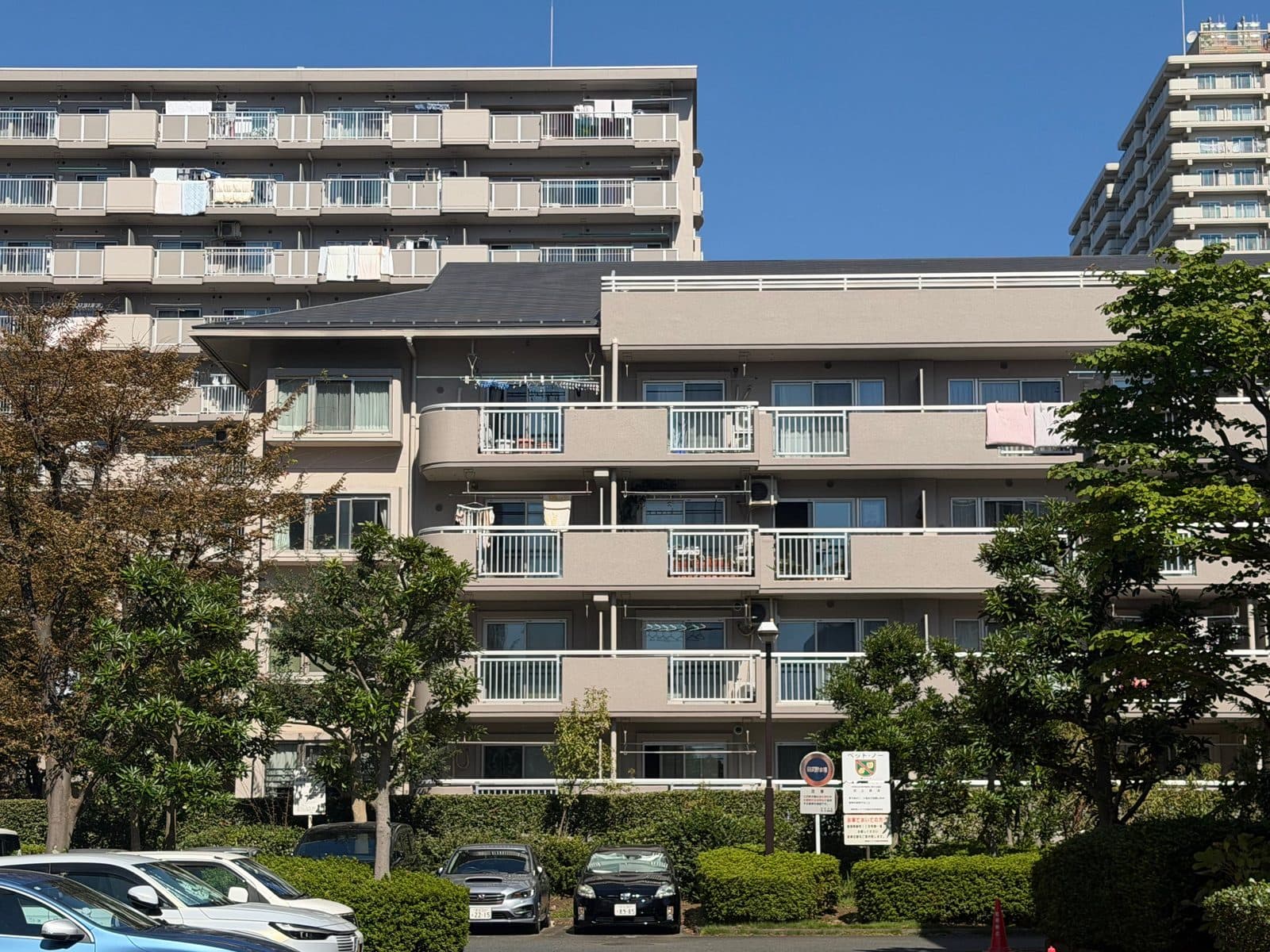
| 団地 danchi | Large mid-century public complexes (many are UR or municipal) | Spacious, older fittings, green surroundings, suburban | ¥ |
Note the false friend: a Japanese "mansion" is not a mansion. It just means a concrete apartment building. If you're sensitive to noise — or worried about making noise, which is a real rejection trigger — the アパート/マンション distinction matters more than the rent difference suggests.
Layout codes are the second thing to learn. The number is how many rooms you get besides the living/dining/kitchen area; the letters (R/K/D/L) describe that kitchen-dining-living space:
- R = one room (kitchen along a wall) · K = separate kitchen · D = dining space · L = living room
- 1R / 1K — a single room, typically 13–25 m². Standard for one person.
- 1DK / 1LDK — a bedroom plus a separate dining/living space. Comfortable solo, workable for a couple.
- 2LDK / 3LDK — family territory; two or three bedrooms plus a living-dining room.
Room sizes are quoted in 帖 / 畳 (jō, tatami mats) — roughly 1.65 m² each. So a "6畳 room" is about 10 m². When a listing says 1K, 6畳, picture a single bedroom of about ten square metres plus a small kitchen strip. That is normal, and it is smaller than most Indians expect.
What moving in really costs: the fee-by-fee breakdown
A Japanese lease front-loads costs in a way that surprises even people who've rented in Mumbai or Bengaluru. For a private apartment, upfront costs run four to six times the monthly rent (GTN). Here's where the money goes, using a ¥70,000/month single-person apartment (≈ ₹42,800 at ~₹0.61 per yen, ECB reference rate, 7 Oct 2026):
| Fee | Japanese name | Typical amount | On ¥70,000 rent | Refundable? |
|---|---|---|---|---|
| Security deposit | 敷金 shikikin | 1–2 months | ¥70,000–140,000 | Mostly, minus cleaning/damage |
| Key money | 礼金 reikin | 0–2 months | ¥0–140,000 | Never |
| Agency fee | 仲介手数料 | Max 1 month + 10% tax (legal cap) | up to ¥77,000 | No |
| Guarantor company | 保証会社 | 0.5–1 month + ~¥10,000/yr renewal | ¥35,000–70,000 | No |
| First month's rent | 前家賃 | 1 month | ¥70,000 | — |
| Fire insurance | 火災保険 | ¥15,000–25,000 / 2 yrs | ~¥20,000 | No |
| Key exchange | 鍵交換 | ¥10,000–25,000 | ~¥15,000 | No |
Realistic total: ¥290,000–420,000 (≈ ₹1.8–2.6 lakh) before you sleep a single night there. (GTN fee guide, A-Realty move-in costs)
Two honest notes. First, key money is exactly what it sounds like — a non-refundable "thank you" to the landlord, a custom dating back decades. You can and should filter for 礼金ゼロ (zero key money) listings; they're increasingly common. Second, the agency fee cap of one month's rent plus tax is set by law, and many agencies charge up to that cap — treat anything above it as a red flag.
Now hold that ¥290,000–420,000 number in your head, because the next section is largely about how to avoid paying it.
Your five real options, compared
| Option | Key money | Guarantor | Move-in cost on ¥70,000 rent | Best for |
|---|---|---|---|---|
| Private lease | 0–2 months | Guarantor company (paid) | ¥290,000–420,000 | Widest choice, once settled |
| UR housing | ❌ None | ❌ Not required | ~¥210,000 (deposit + first rent) | Most people, most of the time |
| Company housing (社宅) | ❌ None | ❌ Employer arranges | Often ¥0 upfront | SSW / factory / caregiver roles |
| Public housing (公営住宅) | ❌ None | Usually none | Lowest of all | Low income, after 6–12 months' residency |
| Share house / monthly | ❌ None | ❌ None | Under ¥100,000 | Your first 1–6 months |
Option 1 — Private lease (most choice, most cost)
The standard route described above. Best once you're settled, know your neighbourhood, and want the widest selection. Use foreigner-friendly portals and agencies, filter for zero key money, and expect the full 4–6 month upfront hit.
Option 2 — UR housing (the one most newcomers should look at first)
UR (Urban Renaissance Agency) is Japan's public rental agency, and for a foreign renter its terms are close to a wishlist — often called the four zeros: no key money, no agency fee, no renewal fee, and no guarantor requirement. That last point matters most: UR waives the guarantor as formal policy, not a case-by-case favour (UR-Net). The single biggest cause of rejection in that MOJ survey simply doesn't apply.
Who qualifies. Foreign applicants must be permanent residents, special permanent residents, or 'mid-to-long-term residents' (中長期在留者 — i.e. holders of a residence card), and must be able to fully understand the contract (UR). Tourist stays do not qualify. Then UR screens on income instead of a guarantor:
- UR's income test depends on the rent. For a single applicant: rent under ¥62,500 needs monthly income of at least 4× the rent; rent from ¥62,500 up to ¥200,000 needs a fixed ¥250,000 a month; rent of ¥200,000 or more needs ¥400,000 a month. (For a household application the middle bracket starts at ¥82,500 and the fixed amount is ¥330,000.)
- Income means taxable, provable income averaged over the past year (UR, Application qualifications).
- No Japanese income yet? Documented overseas income can be accepted.
The two bypasses almost nobody mentions. If you can't clear the income test:
- Prepay rent (1 to 10 years, in one-year steps) and UR waives the income requirement — you get a discounted rate for the prepaid period and generally cannot cancel the prepayment early.
- Or show savings of at least 100× the monthly rent in a yen bank account — this option is open to any applicant, not only students; separately, students aged 18+ can apply with a supporter's income or savings if their own is below half the standard.
The discounts. UR runs rent reductions that fit Indian applicants unusually well (wagaya Japan):
- U35割 — for contract holders aged 35 or under, UR offers lower rent on a 3-year fixed-term lease (UR does not publish one percentage; the saving varies by property). The trade-off: the lease ends after 3 years and cannot be renewed, it is first-come-first-served, and it is not available through a company contract. Ask the UR counter which flats carry it.
- Child-rearing discounts for households with children under 18 — relevant if you're bringing family (see the dependent visa guide).
- Near-residence discount — about 5% when related households live within 2 km.
The honest catches. The deposit is 2 months' rent, plus the pro-rated rent and common-area fee for the move-in month (UR), so UR isn't zero-cost — it's roughly half the private route. Stock skews to suburban complexes and older danchi rather than central buildings, popular units go quickly, and there's no negotiating. If you need Shibuya, UR won't serve you. If you need a fair deal without a guarantor, it's usually the best option on this list.
Option 3 — Company housing (社宅 / 借り上げ社宅) — check this before anything else
If you're arriving on an SSW, Ikusei Shuro, factory, or caregiver route, there's a good chance housing is already part of your package — either company-owned (社宅) or company-leased and sublet to you (借り上げ社宅). Rent is deducted from your salary, often well below market, and the guarantor, deposit and key money problems vanish entirely. Ask your employer before you arrange anything yourself.
But read the terms carefully, because this is also where problems hide:
- Get the deduction in writing — the amount must be stated in your employment conditions, not agreed verbally. Unexplained or inflated "accommodation" deductions are a known abuse; if the number looks disproportionate to what you're getting, treat it as a warning sign about the employer generally.
- It's tied to your job. Leave or lose the role and you typically lose the home at the same time — which is exactly when you'd struggle to rent privately.
- You may be sharing a unit with co-workers, with rules attached.
Company housing is often the best first home and rarely the best permanent one. Use it to land, then build toward UR or a private lease on your own name.
Option 4 — Municipal public housing (公営住宅) — cheapest, but a year-two option
Separate from UR and often confused with it: 公営住宅 is prefectural or city-run housing for low-income households, and rents are the lowest available. Foreign residents can apply, provided you hold mid-to-long-term residency, are registered in the municipality, and are up to date on taxes.
The constraints are real:
- A residency period is usually required — commonly 6 months to a year in that city before you can apply (Yokohama, for example, requires six months' residence or employment in the city).
- Household income caps apply and vary by municipality — Yokohama family units, for instance, cap at around ¥214,000/month household income with children under 18 (Kanagawa public-housing guide).
- Allocation is often by lottery, and waits can be long.
So it's not an arrival option — but if you're on a modest wage and settling long-term in one city, it's worth checking your municipality's rules at the one-year mark.
Option 5 — Share house or monthly apartment (the soft landing)
Share houses and monthly/serviced apartments typically need no key money, no guarantor, and no agency fee — often just a small deposit or admin charge, with move-in totals under ¥100,000 and furniture included. Rent per square metre is higher and privacy lower, but for your first months they solve a problem money alone can't — which brings us to the trap.
Why applications get rejected — and why it's usually not personal
Among foreigners who had house-hunted in the five years before the MOJ survey: 39.3% were refused for being foreign, 41.2% for lacking a guarantor, and 26.8% gave up on a listing marked "no foreigners" (MOJ, 2017).
Prejudice exists — pretending otherwise would be dishonest. But look at what landlords actually screen for and a different picture emerges:
- Guarantor gap. Traditionally a Japanese relative co-signed your lease. You don't have one — so listings insisting on a personal guarantor were never going to work. The fix is a guarantor company (保証会社), now accepted on the large majority of listings; you pay 0.5–1 month's rent and they underwrite you (Kurabeel). Or you choose UR and skip it entirely.
- Income ratio. A common rule of thumb is to keep rent at roughly one-third or less of gross monthly income, though actual screening varies by landlord, management company and guarantor company. On a ¥250,000 salary, aim below ¥83,000 — see our salary and tax breakdown for what Indians typically earn by route.
- Communication worry. Many management companies phone-screen in Japanese. Even N4-level "I can handle bills and emergencies" Japanese — or an agent who fields the call — changes outcomes.
- Landlord anxiety about the unknown. Garbage-rule mistakes and noise complaints are the two fears agents cite most. Showing you know the rules (garbage guide, noise etiquette) sounds small; agents notice.
The reframe: you can't change your passport, but every other trigger on that list is fixable within weeks — and two of the five options above remove the guarantor problem completely.
The week-one trap — and the "land soft, then lease" plan
Your first week in Japan has a chicken-and-egg problem nobody warns you about. To register your residence card address, open a bank account and get a phone contract, you need an address. But to pass private lease screening, landlords want a Japanese bank account, a phone number and income history — the exact things you don't have yet.
Don't fight the loop. Break it:
If you already clear screening — a firm job offer, a guarantor company, and a Japanese bank account — you may be able to rent a normal apartment right away. If you don't yet, this staged plan avoids the week-one trap:
- Months 0–3: land soft. Arrive into company housing, a share house, or a monthly apartment — something that accepts a passport, visa and overseas payment. Register your address, open the bank account (see our bank account guide for the full process), get the phone.
- Months 3–6: build the file. Salary lands in your Japanese account, you have payslips, a phone number, and some basic Japanese. You're now a strong applicant, not a risky one.
- Month 6+: sign the real lease. Shop UR first (no guarantor, and check whether you qualify for the U35 discount), then private listings filtered for zero key money.
- Month 12+: if money is tight, check your municipality's 公営住宅 rules — you may now meet the residency requirement.
The same math that applies to monthly living costs applies here: a slightly patient housing plan in the first half-year routinely saves roughly ₹50,000 to ₹1.3 lakh in fees — money better sent home (see how to remit it properly).
This article is general information, not legal, immigration, tax, financial, or medical advice. Rules, fees, and figures change and vary by individual circumstances — verify the latest details with official sources (e.g. the Urban Renaissance Agency, your municipality, and the relevant agency or landlord) and consult a qualified professional before making decisions.